Tongue Interface Enables Disabled Individuals to Operate Computers

Nov 12, 2025 By Emma Thompson

I still remember the first time I saw someone control a computer using only their tongue. A friend's father, paralyzed from the neck down after an accident, was navigating a web browser, typing an email, and even playing a simple game. He did it all with a small, transparent dental retainer-like device resting against his palate. The look of sheer independence on his face was unforgettable. For millions with severe physical disabilities like spinal cord injuries, ALS, or muscular dystrophy, this isn't just a convenience—it's a lifeline back to communication, work, and connection.


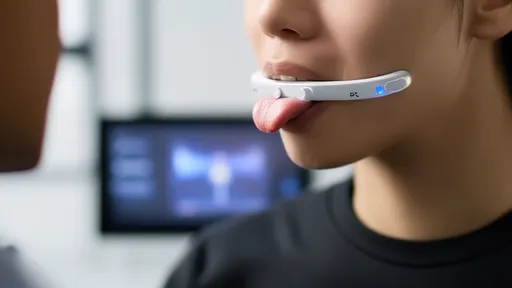
The core technology enabling this is the intra-oral tongue interface. It’s a sophisticated piece of assistive technology that tracks the tongue's position inside the mouth. The most common design is a palatal device, custom-molded to fit the roof of the user's mouth. This device is embedded with sensors—often pressure sensors or electrodes that detect minute electrical signals from the tongue muscles. When the user touches specific areas of the palate with their tongue, the sensors register the contact and wirelessly transmit the signal to a computer or tablet. Each touch point is programmed to act as a specific command, like a mouse click, a keyboard key, or a directional arrow.


Setting up the system is a highly personalized process. A dental professional first takes an impression of the user's palate to create the custom-fit device. Then, a clinician or therapist helps map the tongue's movements to computer functions. For instance, touching the front might be a left-click, the right side might be a right-click, and a swipe to the back could scroll down. The beauty is its adaptability; the command layout can be tailored to the user's specific motor abilities and cognitive preferences. This isn't a one-size-fits-all solution, but a tool that learns and evolves with the individual.


What can you actually do with it? The applications are vast. Beyond basic computer navigation, users can control powered wheelchairs, operate smart home devices to adjust lights or temperature, and communicate through speech-generating devices. It effectively turns the tongue into a high-precision joystick and keyboard. The tongue is an ideal controller for this purpose because the nerve connecting it to the brain, the hypoglossal nerve, is often unaffected by spinal cord injuries. It remains a reliable and dexterous muscle for many who have lost control of their limbs.


A common misconception is that this technology is brand new and inaccessible. While it's true that cutting-edge research continues, several systems are already commercially available and covered by some insurance plans or government assistive technology programs. The initial cost and fitting process can be barriers, but non-profit organizations often provide grants and support. The key is to connect with a rehabilitation specialist who can guide you through the assessment and funding options.


Another hurdle is the initial learning curve. Mastering tongue control requires practice and patience. It’s not instantly intuitive for everyone. Rehabilitation therapists often compare it to learning a new language or instrument. The brain needs time to re-map intentions to these new, subtle movements. However, with consistent daily practice—even just 15-20 minutes—most users develop functional control within a few weeks. The brain's neuroplasticity is the user's greatest ally here.


The future of this field is even more promising. Researchers are developing "hands-free" systems that don't require a physical palatal device at all. Instead, they use small, discreet tattoos or stickers on the tongue that are detected by sensors mounted on a headset or even via a smartphone's camera. Other teams are working on integrating AI to predict user intent, making the control smoother and faster. The goal is to make the technology more invisible, comfortable, and powerful.


Beyond the mechanics, the true impact is profoundly human. This technology restores a sense of agency. It allows a person to express their thoughts without an intermediary, to pursue education, to maintain a career, or simply to browse the internet on their own terms. It fights the isolation that severe disability can impose, opening a digital window to the world. The ability to send a text message or turn on a favorite song independently is a powerful affirmation of self.


If you or someone you know could benefit from this, the first step is a conversation with a physical medicine and rehabilitation doctor or a speech-language pathologist specializing in augmentative and alternative communication (AAC). They can perform an evaluation to determine if a tongue interface is a suitable option and connect you with the necessary resources. The journey to greater independence starts with that single, informed inquiry.

Recommend Posts
Tech

Space-Manufactured Anticancer Drugs Achieve 100-Fold Purity Increase

By Jessica Lee/Nov 12, 2025

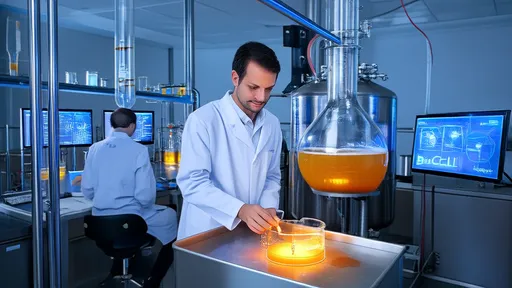
Imagine producing life-saving cancer drugs not in a sterile lab on Earth, but in the microgravity environment of space. It sounds like science fiction, but it's a reality being pioneered right now aboard the International Space Station. The absence of gravity fundamentally changes how crystals form, allowing for the creation of pharmaceutical compounds of unprecedented purity. This isn't just a marginal improvement; we're talking about a potential hundred-fold increase in purity compared to what's possible terrestrially.
Tech

Israel's Iron Dome System Intercept Success Rate Rises to 97%

By Ryan Martin/Nov 12, 2025

In the ever-volatile airspace above Israel and Gaza, a remarkable technological evolution is quietly rewriting the rules of modern asymmetric warfare. The Iron Dome air defense system, a cornerstone of Israel's multi-layered defense strategy, has reportedly achieved a staggering 97% interception rate against incoming rocket threats in recent engagements. This isn't a static number from a brochure; it's a live-fire testament to a system that has been relentlessly refined through a decade of operational pressure.
Tech

Successful Preservation of Nematode Neural Networks in Consciousness Uploading Experiment

By Laura Wilson/Nov 12, 2025

You might have seen it in sci-fi movies: the idea of uploading a human mind into a computer, achieving digital immortality. But what was once pure fiction is now taking its first, tangible steps in laboratories around the world. The latest breakthrough doesn't involve humans, but something far simpler—a tiny worm. Scientists have successfully mapped and digitally preserved the entire neural network of a C. elegans roundworm, creating a functional simulation of its brain. This isn't just data storage; it's the first complete "connectome" of an organism, uploaded and operational in a virtual environment.
Tech

Canada Develops Tree Gene Editing to Combat Climate Change

By Benjamin Evans/Nov 12, 2025

In the quiet forests of British Columbia, a team of Canadian scientists is conducting research that could reshape our approach to climate change. While most climate solutions focus on reducing emissions, these researchers are working on something more fundamental: redesigning the very trees that cover our landscapes to better withstand our changing world.
Tech

Tongue Interface Enables Disabled Individuals to Operate Computers

By Emma Thompson/Nov 12, 2025

I still remember the first time I saw someone control a computer using only their tongue. A friend's father, paralyzed from the neck down after an accident, was navigating a web browser, typing an email, and even playing a simple game. He did it all with a small, transparent dental retainer-like device resting against his palate. The look of sheer independence on his face was unforgettable. For millions with severe physical disabilities like spinal cord injuries, ALS, or muscular dystrophy, this isn't just a convenience—it's a lifeline back to communication, work, and connection.
Tech

New Zealand Tests Geothermal Energy for Bitcoin Mining

By Daniel Scott/Nov 12, 2025

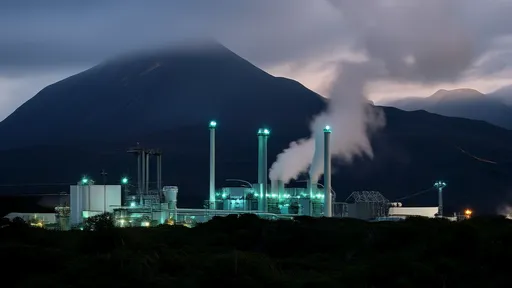
When you picture a bitcoin mining facility, what comes to mind? Probably massive, humming warehouses in cold climates, consuming enough electricity to power small countries. That image is about to be challenged. In a quiet corner of New Zealand's North Island, a groundbreaking pilot project is quietly demonstrating a radically different future for cryptocurrency. They're using the earth's own heat.
Tech

Belgium Turns Beer Waste into Battery Material

By Sophia Lewis/Nov 12, 2025

Belgium is quietly brewing up a revolution that has nothing to do with its famous Trappist ales and everything to do with powering our future. Researchers at a leading university have discovered a way to transform the vast quantities of grain waste from the beer brewing process into a high-performance, sustainable material for batteries. This isn't just a laboratory curiosity; it's a practical solution addressing two significant global challenges: the growing demand for energy storage and the pressing need to reduce industrial waste.
Tech

Mexico Uses Artificial Intelligence to Protect Ancient Mayan Sites

By Victoria Gonzalez/Nov 12, 2025

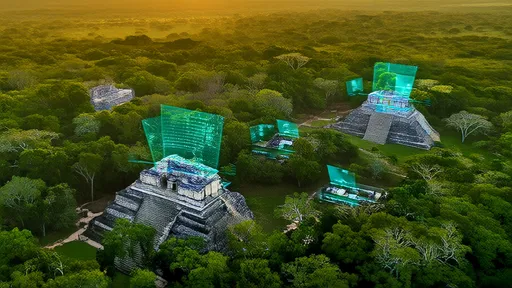
In the dense jungles of Mexico's Yucatan Peninsula, archaeologists are fighting a race against time—and technology is becoming their most unexpected ally. Ancient Mayan sites, some still hidden beneath centuries of vegetation, face threats from climate change, urban expansion, and even looters. But now, artificial intelligence is stepping in to protect these cultural treasures in ways that were unimaginable just a decade ago.
Tech

Japan's Simulated Gravity Lunar Base Enters Trial Use

By Michael Brown/Nov 12, 2025

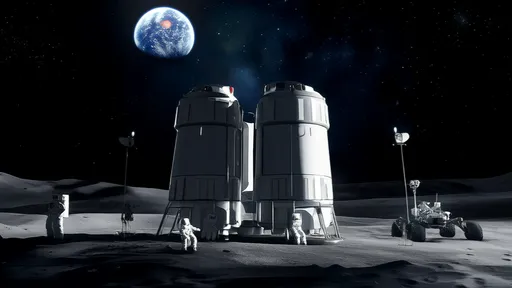
It's a scene straight out of a science fiction novel, but it's now our reality. Japan's space agency, JAXA, has officially commenced operational trials of its simulated gravity lunar base, a monumental leap in humanity's quest to become a multi-planetary species. This isn't just another module on the International Space Station; it's a self-contained habitat designed to replicate the one-sixth gravity of the Moon, providing the first true test-bed for what long-term living on another celestial body will actually feel like. For decades, the dream of a Moon village has been hampered by the unknown physiological and psychological effects of low gravity. This facility is the critical first step in turning that dream into a tangible, operational plan.
Tech

Swiss Tunnel Boring Machine Speed Increases by 300%

By Emma Thompson/Nov 12, 2025

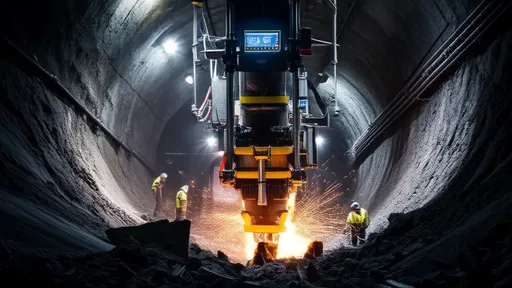
In a stunning breakthrough that has sent shockwaves through the global engineering and construction sectors, a Swiss-led consortium has announced the successful development of a new tunnel boring machine (TBM) technology that achieves a staggering 300% increase in excavation speed. This isn't a minor upgrade; it's a complete paradigm shift for an industry where even single-digit percentage gains in performance are celebrated. The project, shrouded in secrecy during its development phase, has now been unveiled, showcasing a machine that can chew through rock and soil at previously unimaginable rates.
Tech

Egypt Discovers New Pyramid Chamber with Ground-Penetrating Radar

By Noah Bell/Nov 12, 2025

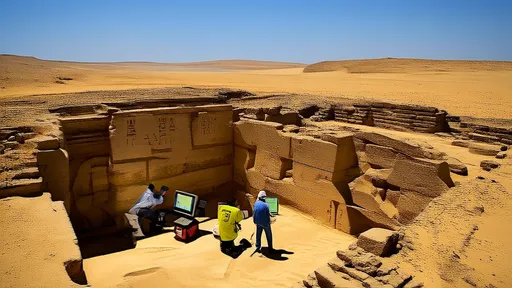
Archaeologists in Egypt have made a discovery that's sending ripples through the egyptology community. Using ground-penetrating radar (GPR) technology, a research team has identified what appears to be a significant, previously unknown void deep within the structure of a well-known pyramid. This isn't just another small chamber; early analysis suggests the space is substantial, hinting at the possibility of a major, sealed chamber untouched for millennia.
Tech

Real-time Dialect-to-English Translation with AI

By George Bailey/Nov 12, 2025

Imagine walking into a local market in rural Italy, pulling out your phone, and having a fluid conversation with a vendor—not in stilted textbook Italian, but in the natural cadence of their regional dialect. This isn't a scene from a sci-fi movie; it's the reality that AI-powered dialect translation is rapidly bringing to life. For decades, language technology has stumbled over the rich, nuanced variations of dialects, leaving over 300 million dialect speakers globally underserved. But today, breakthroughs in neural networks and real-time processing are finally cracking the code.
Tech

Self-Replicating Robot Completes Lunar Base Construction Simulation

By Megan Clark/Nov 12, 2025

Imagine a lunar construction site with no human workers in sight, only swarms of autonomous robots moving across the dusty terrain. They aren't just following pre-programmed instructions—they're coordinating, adapting, and even building copies of themselves using locally sourced materials. This isn't science fiction anymore. Recent simulations from the International Space Exploration Consortium have demonstrated that self-replicating robots could complete a functional lunar base in under five years, a task that would take human crews decades using conventional methods.
Tech

Arctic Research Station Employs Inflatable Smart Materials

By Lily Simpson/Nov 12, 2025

Imagine a structure that can inflate itself in hours, withstand Arctic gales, and monitor its own structural health while keeping scientists cozy at -50°C. This isn't science fiction—it's the next generation of polar research stations, now moving from blueprint to reality thanks to smart, air-filled materials. For decades, building in the Arctic meant hauling heavy materials across treacherous ice, a slow, expensive, and environmentally disruptive process. The result was often rigid, permanent bases that couldn't adapt to shifting ice or new research needs. The logistical nightmare of traditional construction is finally meeting its match.
Tech

Digital Twin Cities for Anticipatory Traffic Congestion Forecasting

By Victoria Gonzalez/Nov 12, 2025

You're rushing to an important meeting, glancing at your watch as brake lights stretch endlessly ahead. That sinking feeling of being trapped in gridlock isn't just frustrating—it costs cities billions in lost productivity and fuels environmental stress. But what if urban planners could see these traffic jams before they even happen? This isn't science fiction; it's the emerging reality powered by digital twin technology.
Tech

Gesture Recognition Replaces Smartphone Touchscreens

By Sophia Lewis/Nov 12, 2025

You're scrolling through your phone on the subway when suddenly it slips from your sweaty palm, clattering to the floor. We've all been there—that moment of panic followed by the awkward fumble to retrieve our precious device. What if you could control your phone without ever touching the screen? What if a simple hand gesture could open apps, send messages, or play music?
Tech

Global First Commercial Space Mining Mission Sets Sail

By Rebecca Stewart/Nov 12, 2025

The sky, for millennia a canvas for dreams and constellations, just became a construction site. This morning, at 5:42 AM EST, a new chapter in human industry began not with a ground-breaking, but with a launch. The spacecraft Prospector-1, operated by the venture Astral Forge, successfully lifted off from Cape Canaveral, embarking on the world's first commercial asteroid mining mission. Its target is a small, metal-rich asteroid designated 1986 DA, a cosmic nugget floating millions of miles away.
Tech

Synthetic Biology Creates Spider Silk Stronger Than Steel

By Rebecca Stewart/Nov 12, 2025

Imagine a material stronger than steel, more flexible than nylon, and completely biodegradable. It sounds like science fiction, but it's the reality of spider silk. For decades, scientists have been captivated by its potential, but harvesting it from spiders is notoriously difficult and inefficient. They're territorial and produce minuscule amounts. This is where synthetic biology enters the stage, completely revolutionizing how we approach this wonder material.
Tech

Saudi NEOM Builds the World's Largest Coral Nursery

By Grace Cox/Nov 12, 2025

Saudi Arabia's NEOM has embarked on a breathtakingly ambitious environmental venture, announcing the development of what will become the world's largest land-based coral reef reproduction farm. This monumental project, situated along the Red Sea coast, represents a significant leap in marine conservation technology and aligns with NEOM's vision of ecological innovation. The initiative comes at a critical time when coral reefs globally face unprecedented threats from climate change, warming waters, and human activity.
Tech

Dissolvable Electronic Devices to Reduce E-Waste

By Olivia Reed/Nov 12, 2025

Imagine tossing your old smartphone into a glass of water and watching it dissolve into harmless, biodegradable components. It sounds like science fiction, but it’s the exciting reality being pioneered in labs around the world. With over 50 million metric tons of electronic waste generated globally each year—and much of it piling up in landfills or improperly recycled—the need for sustainable alternatives has never been more urgent. By the end of this article, you’ll understand how transient electronics work, the materials making this possible, and the real-world applications that could redefine our relationship with technology.