Synthetic Biology Creates Spider Silk Stronger Than Steel
Imagine a material stronger than steel, more flexible than nylon, and completely biodegradable. It sounds like science fiction, but it's the reality of spider silk. For decades, scientists have been captivated by its potential, but harvesting it from spiders is notoriously difficult and inefficient. They're territorial and produce minuscule amounts. This is where synthetic biology enters the stage, completely revolutionizing how we approach this wonder material.
The core challenge was replicating the complex process that occurs inside a spider. Spiders don't just "make" silk; they synthesize specific proteins in their glands and then spin them through a delicate duct, where the protein structure transforms into an incredibly strong fiber. To mimic this, researchers first had to decode the spider's DNA. They identified the genes responsible for the key silk proteins, known as spidroins. This was the first major breakthrough—understanding the genetic blueprint.
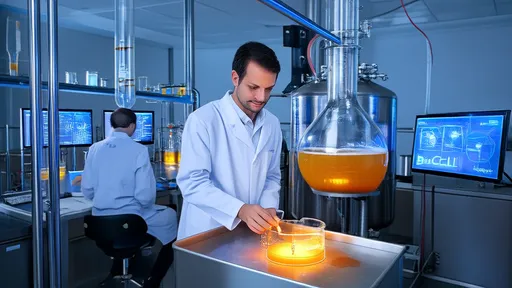
But you can't farm spiders at an industrial scale. The solution? Use nature's other great bio-factory: microorganisms. Scientists took the identified spider silk genes and inserted them into the DNA of bacteria, like E. coli, or yeast. These modified microbes then read the new genetic instructions and started producing the spider silk proteins as they fermented, much like brewing beer. This method allows for production in massive, controlled fermentation tanks, bypassing the need for spiders entirely.
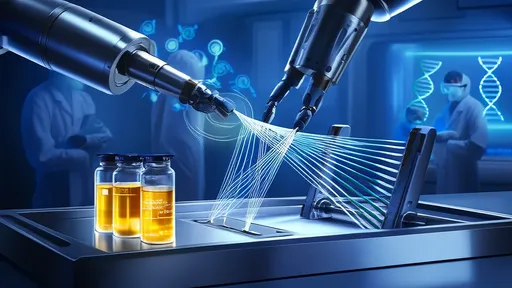
Getting the microbes to produce the protein was only half the battle. The real magic of spider silk lies in its spinning. In a spider's gland, the protein solution is transformed into a solid fiber through a precise combination of pH changes, water removal, and mechanical shear forces. Replicating this artificially has been the final frontier. Companies are now developing bio-inspired spinning devices that push the protein solution through tiny channels and nozzles, mimicking the spider's duct to create fibers with the desired strength and elasticity.
The performance metrics are what make this so groundbreaking. Pound for pound, synthetic spider silk has been shown to be stronger than high-grade steel and can absorb more energy than bulletproof Kevlar before breaking. Its combination of strength and extensibility is virtually unmatched in the materials world. And unlike synthetic polymers, it's produced from renewable sources and is fully biodegradable, offering a sustainable alternative to many industrial materials.
So, what can we actually do with this material? The applications are vast and transformative. In medicine, its biocompatibility makes it ideal for advanced sutures, nerve guides, and even artificial tendons. In the textile industry, we could see ultra-durable, lightweight, and sustainable athletic wear. In aerospace and automotive manufacturing, composite materials reinforced with spider silk fibers could lead to lighter, more fuel-efficient vehicles and aircraft. The potential seems almost limitless.
Of course, the path from the lab to the marketplace isn't without its hurdles. Scaling up production to be cost-competitive with established materials like nylon or carbon fiber is a significant challenge. There are also ongoing efforts to fine-tune the properties of the silk for specific applications, making it stiffer for one use and more elastic for another. But the progress in the last decade has been staggering, with several startups and major corporations now racing to commercialize the technology.
This journey from a spider's abdomen to a fermentation tank is more than just a story about a new material. It represents a fundamental shift in manufacturing. We are moving from extracting and processing to programming and growing. Synthetic biology allows us to harness the blueprints of nature and produce them with unprecedented efficiency and sustainability. It forces us to reimagine what's possible, turning one of nature's most elegant designs into a cornerstone of our future technology.
By understanding this process, you're not just learning about a super-material; you're witnessing the dawn of a new industrial revolution, one built on biology. The next time you see a spider web, remember that its delicate strands are inspiring a wave of innovation that could reshape everything from the clothes we wear to the ways we heal our bodies.