Space-Manufactured Anticancer Drugs Achieve 100-Fold Purity Increase
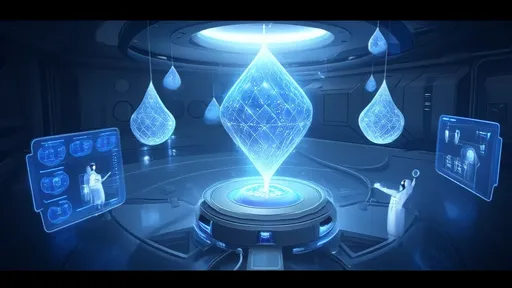
Imagine producing life-saving cancer drugs not in a sterile lab on Earth, but in the microgravity environment of space. It sounds like science fiction, but it's a reality being pioneered right now aboard the International Space Station. The absence of gravity fundamentally changes how crystals form, allowing for the creation of pharmaceutical compounds of unprecedented purity. This isn't just a marginal improvement; we're talking about a potential hundred-fold increase in purity compared to what's possible terrestrially.
The core challenge on Earth is gravity itself. It causes sedimentation and convection, leading to imperfect molecular structures and impurities in the final crystalline product. In the microgravity of space, these disruptive forces are virtually eliminated. Proteins and other complex molecules used in targeted cancer therapies can form larger, more perfectly ordered crystals. This superior structure is the key. A purer drug means a more potent and specific treatment with drastically fewer side effects for patients, a holy grail in oncology.
One of the most promising experiments in this field involves a key protein used in a specific class of cancer inhibitors. On Earth, growing crystals of this protein consistently resulted in structural defects that limited the drug's efficacy. When the same process was conducted on the ISS, the resulting crystals were not only larger but exhibited a near-flawless atomic arrangement. This level of purity allows researchers to precisely map the protein's structure using X-ray crystallography, leading to the design of more effective drugs that can bind to cancer cells with incredible accuracy.
Beyond just improving existing drugs, this research opens the door to developing entirely new therapies. Many complex biological compounds are too unstable or difficult to crystallize effectively on Earth, making them impractical for pharmaceutical use. The space environment provides a unique "factory" setting to study and produce these elusive molecules. We're not just refining known formulas; we're discovering new pathways to treatment that were previously hidden from us by the constraints of our own planet.
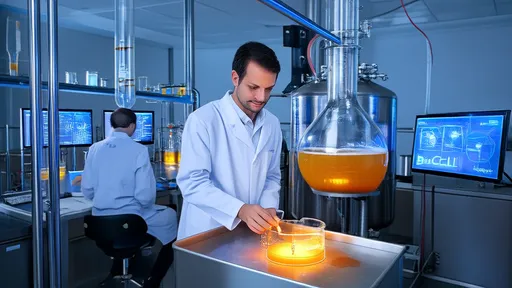
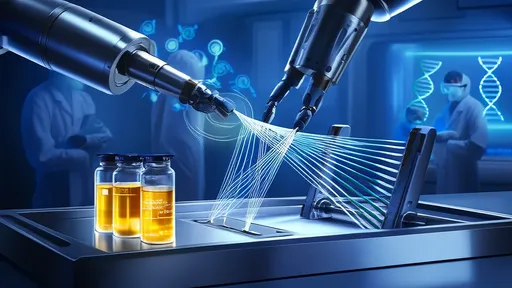
The logistical process is fascinating. Experiments are prepared in specialized, automated modules on Earth, launched to the ISS, and then run by astronauts with minimal intervention. After a set crystallization period, the samples are preserved and returned to Earth for analysis. While this sounds complex, the potential payoff justifies the effort. The data gathered from these space-grown crystals is already being used by pharmaceutical companies to refine their manufacturing processes back on the ground, creating a virtuous cycle of improvement.
Of course, scaling this up presents its own set of challenges. The high cost of launch and limited space on the ISS are significant hurdles. However, with the rise of commercial space stations and more affordable launch services, the vision of dedicated orbital biomanufacturing facilities is moving closer to reality. The goal isn't necessarily to produce all cancer drugs in space, but to use the knowledge gained there to revolutionize production on Earth.
This endeavor represents more than a technical breakthrough; it's a profound shift in our approach to medicine. It demonstrates that the solutions to some of our most persistent earthly challenges, like cancer, might be found by looking beyond our world. The emotional impact is immense—offering not just incremental progress, but a leap forward that could redefine quality of life for millions of patients and their families. It’s a powerful reminder that the final frontier holds secrets not just to the universe, but to our own well-being.
By embracing the unique laboratory of space, we are unlocking a new era of medical discovery. The initial results are a resounding confirmation that this path is worth pursuing. The next step is to continue these experiments, gather more data, and work towards integrating these space-born insights into mainstream pharmaceutical development. The future of cancer treatment is being written, quite literally, in the stars.