Canada Develops Tree Gene Editing to Combat Climate Change
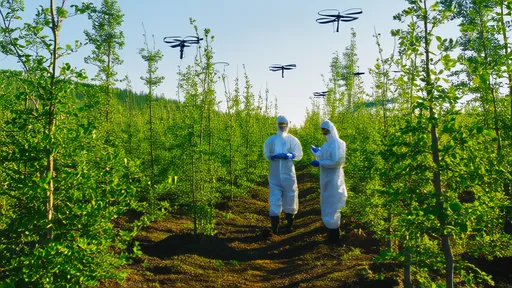
In the quiet forests of British Columbia, a team of Canadian scientists is conducting research that could reshape our approach to climate change. While most climate solutions focus on reducing emissions, these researchers are working on something more fundamental: redesigning the very trees that cover our landscapes to better withstand our changing world.
Dr. Elena Martinez, lead researcher at the University of British Columbia's Forest Genomics Lab, explains their unconventional approach. "We're not just planting more trees—we're enhancing their natural abilities to survive in conditions they've never faced before. Climate change isn't coming; it's here, and our forests are already struggling to adapt."
The research focuses on several key genetic modifications that could help trees thrive in warmer temperatures and resist new pests. One breakthrough involves enhancing drought resistance by modifying genes that control water retention. Another targets improved carbon sequestration capabilities, essentially creating trees that can absorb more atmospheric carbon than their natural counterparts.
What makes this research particularly urgent is the rapid decline of British Columbia's forests. The mountain pine beetle infestation, exacerbated by warmer winters, has devastated over 18 million hectares of forest since the 1990s. Meanwhile, increased wildfire activity and drought conditions have created a perfect storm of challenges for Canada's timber industry and natural ecosystems.
The technology behind these genetic modifications has evolved significantly from earlier genetic engineering methods. Researchers now use CRISPR gene-editing technology, which allows for precise changes to specific genes without introducing foreign DNA. "We're not creating Frankenstein trees," Martinez clarifies. "We're simply accelerating natural adaptation processes that would normally take centuries."
Field trials have shown promising results. Modified white spruce seedlings demonstrated 30% better survival rates in drought conditions compared to conventional seedlings. Another test with lodgepole pine showed increased resistance to bark beetles, a major threat to Canadian forests. These improvements could mean the difference between thriving forests and barren landscapes in the coming decades.
However, the research faces significant regulatory hurdles and public skepticism. Canada's regulatory framework for genetically modified trees remains complex, requiring extensive environmental risk assessments. Public concerns about "designer trees" and their potential ecological impacts have slowed research progress, despite the climate urgency.
Dr. Marcus Chen, an environmental ethicist consulting on the project, acknowledges these concerns. "We're walking a careful line between intervention and preservation. Every modification undergoes rigorous testing for unintended ecological consequences. The greater risk may be in doing nothing while our forests disappear."
The economic implications are equally significant. Canada's forest industry contributes over $25 billion annually to the national economy and supports hundreds of thousands of jobs. Climate-related forest damage already costs the industry millions each year in lost timber and increased management costs. Genetic solutions could help preserve both ecosystems and livelihoods.
Looking forward, the research team is exploring even more ambitious applications. They're studying how genetic modifications could help trees adapt to northern migration as temperatures rise, potentially preserving forest cover as traditional ranges become inhospitable. Other projects focus on enhancing fungal partnerships that help trees absorb nutrients more efficiently.
The human element remains central to their work. Indigenous communities, who have managed these forests for generations, are participating in research planning. Their traditional knowledge of forest ecology informs which traits researchers prioritize and how modified trees might integrate into existing ecosystems.
As climate patterns continue to shift unpredictably, the need for innovative solutions becomes increasingly urgent. While genetic modification alone won't solve climate change, it represents a crucial tool in our adaptation toolkit. The trees being developed in Canadian labs today might well become the forests of tomorrow—resilient, carbon-hungry, and better equipped to handle whatever our changing climate brings.
The research continues to evolve, with new findings emerging monthly. What remains constant is the recognition that in the face of unprecedented environmental challenges, we need equally unprecedented solutions—and sometimes, those solutions require looking at old problems through a completely new lens.