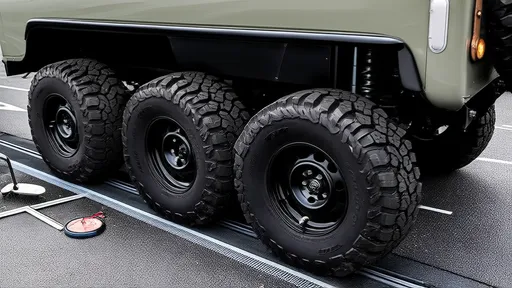
Realistic Reference Table for Vehicle Tire Friction Coefficients"
The coefficient of friction between a vehicle's tires and the road surface is a critical factor in determining safety, performance, and overall driving dynamics. This value, often represented as μ (mu), varies depending on numerous conditions, including tire composition, road material, weather, and even the age of the tires. Understanding these variables can help drivers, engineers, and policymakers make informed decisions to enhance road safety and optimize vehicle handling.
Tire Composition and Its Impact on Friction
Modern tires are engineered with complex rubber compounds designed to balance grip, durability, and fuel efficiency. Summer tires, for instance, use a softer rubber that provides excellent traction on dry pavement but may harden in cold temperatures, reducing effectiveness. Winter tires, on the other hand, incorporate silica and specialized tread patterns to maintain flexibility and grip in icy conditions. All-season tires attempt a compromise but often fall short of specialized tires in extreme conditions.
The tread pattern also plays a significant role. Deep, aggressive treads improve traction on loose surfaces like gravel or snow, while smoother, low-profile treads enhance performance on dry asphalt. Racing slicks, devoid of tread, maximize contact area for superior grip in dry conditions but become dangerously slippery in the rain. The interplay between rubber compounds and tread design directly influences the coefficient of friction, making tire selection a crucial decision for any driver.
Road Surface Variations and Their Effects
Just as tires vary, so do road surfaces. Fresh asphalt typically offers a high coefficient of friction, often between 0.7 and 0.9 under dry conditions. Over time, however, weathering, oil buildup, and wear reduce this value. Concrete roads, while more durable, often provide slightly less grip than asphalt, particularly when wet. Gravel and dirt roads present even greater variability, with friction coefficients ranging from 0.4 to 0.7 depending on compaction and moisture levels.
Weather conditions dramatically alter these values. Rain creates a thin layer of water between the tire and road, leading to hydroplaning, where friction can drop to near zero. Ice is even more treacherous, with coefficients as low as 0.1. Engineers combat these issues with additives in road materials, such as high-friction aggregates in wet areas, and textured surfaces to improve water dispersion. Despite these measures, driver awareness remains the first line of defense against low-friction scenarios.
Real-World Implications for Drivers and Engineers
For everyday drivers, understanding friction coefficients can mean the difference between a safe stop and a collision. The stopping distance of a vehicle is inversely proportional to the coefficient of friction—halving the friction coefficient doubles the stopping distance. This is why maintaining proper tire pressure, tread depth, and choosing seasonally appropriate tires are essential practices.
Automotive engineers use friction data to design braking systems, stability controls, and even autonomous driving algorithms. Anti-lock braking systems (ABS), for example, rely on maintaining tire friction just below the skid threshold to maximize deceleration while retaining steering control. Similarly, traction control systems modulate engine power to prevent wheel spin, especially in low-friction conditions.
Policymakers also utilize this information when setting speed limits, designing roadways, and mandating safety standards. High-risk areas, such as sharp curves or steep descents, often incorporate high-friction surfaces or warning systems to mitigate accidents. The ongoing development of smart roads, which can adjust friction properties in real-time based on weather and traffic, promises even greater advancements in the future.
Future Trends in Tire and Road Technology
Innovation in tire technology continues to push boundaries. Researchers are exploring nanomaterials that could offer superior grip without sacrificing longevity. Self-healing rubber compounds, capable of repairing minor cuts and abrasions, may extend tire life while maintaining consistent friction properties. Electrically conductive tires are also under development, potentially interacting with smart road systems to optimize friction dynamically.
Road construction is evolving as well. Porous asphalt mixtures reduce water buildup, minimizing hydroplaning risks. Solar-reflective coatings help prevent ice formation, while embedded sensors can provide real-time friction data to connected vehicles. These advancements, combined with autonomous driving systems that can adapt to changing friction conditions instantaneously, herald a future where traction-related accidents are significantly reduced.
Ultimately, the coefficient of friction between tires and roadways is a deceptively simple metric with profound implications. From the chemistry of rubber to the physics of motion, this single value encapsulates a complex interplay of factors that dictate how vehicles interact with their environment. As technology progresses, our ability to measure, manipulate, and maximize this friction will continue to shape the safety and efficiency of transportation systems worldwide.