Athletic Game Player Career Decline Curve Model
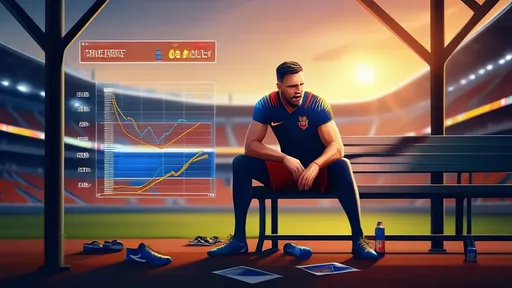
The concept of an athlete's career decline has long fascinated sports scientists, team managers, and fans alike. While every player's journey is unique, decades of data analysis have revealed startling patterns in performance deterioration across different sports. The career trajectory of professional athletes rarely follows a simple linear path - instead, it resembles a curve with distinct phases of ascent, peak, and eventual decline. Understanding these patterns isn't just academic; it has real-world implications for contract negotiations, team building strategies, and even how players prepare for life after sports.
The physiology behind athletic decline begins explaining why even the most gifted competitors can't maintain peak performance indefinitely. Muscle fibers gradually lose their explosive capacity after age 25-30, with fast-twitch fibers particularly vulnerable. Joint cartilage wears down from years of intense training and competition, while recovery times lengthen noticeably. What's fascinating is how these biological realities manifest differently across sports. NBA players typically see scoring efficiency drop around age 29-31, while NFL running backs often decline sharply by 27. Baseball pitchers experience diminished velocity in their early 30s, though crafty veterans can compensate with improved pitch selection and location.
Modern analytics have transformed how we measure and predict career arcs. Sophisticated models now track not just traditional statistics but biomechanical markers, injury history, and even sleep patterns to forecast when a player might begin regressing. Teams invest millions in proprietary algorithms that attempt to pinpoint the inflection point where a veteran's experience no longer outweighs their physical limitations. These models reveal surprising nuances - for instance, perimeter players in basketball tend to age more gracefully than post players, while goalkeepers in soccer frequently maintain elite performance deeper into their 30s than field players.
The psychological dimension of decline often gets overlooked in quantitative analyses. Many athletes describe struggling with the realization that their bodies can no longer execute what their minds envision. This cognitive dissonance leads some to retire prematurely while others hang on too long, damaging their legacies. Sports psychologists note that players who diversified their identities beyond athletics typically adjust better to declining skills. Conversely, those who tied their self-worth entirely to performance frequently experience severe depression during their career twilight.
Positional differences in decline curves present fascinating case studies. In American football, quarterbacks and kickers routinely play into their late 30s, while receivers and running backs rarely maintain effectiveness past 32. Hockey forwards see sharp drops in scoring around 31-33, but defensemen often remain productive longer due to the position's reliance on hockey IQ. These variations stem from how different roles prioritize various physical attributes - speed versus strength versus decision-making - and how those attributes age differently.
Training innovations have begun altering traditional decline trajectories. Today's players benefit from advanced recovery modalities, personalized nutrition plans, and year-round conditioning that previous generations lacked. LeBron James' career longevity exemplifies how modern sports science can extend peak performance windows. However, these advances can't stop aging entirely - they merely slow the inevitable. The most sophisticated models now incorporate "maintenance cost" metrics showing how much training volume a veteran needs just to maintain skills that came effortlessly in their youth.
Contract structures increasingly reflect teams' awareness of decline curves. Front-loaded deals, performance incentives, and shorter contract terms all represent attempts to mitigate the risk of paying premium money for declining production. Savvy general managers build rosters with staggered age distributions, ensuring they always have emerging talent to replace fading veterans. This financial reality creates difficult conversations when beloved franchise players reach their statistical twilight, forcing organizations to balance sentiment against cold analytics.
The most heartbreaking declines occur when injuries accelerate the process. A torn ACL or ruptured Achilles can instantly transform an All-Star into a shell of their former self. Medical advances have improved recovery outcomes, but many players never fully regain their pre-injury explosiveness. These cases provide stark reminders that decline curves aren't always gradual - sometimes they're cliff edges. Teams now weigh injury history more heavily than ever when evaluating long-term commitments to players.
Cultural attitudes toward aging athletes reveal much about our sports values. European soccer clubs traditionally showed less patience with veterans than American franchises, though this gap has narrowed recently. Japanese baseball teams historically valued veteran leadership more than MLB teams, willingly accepting statistical decline for intangible benefits. These philosophical differences manifest in how organizations handle the delicate process of transitioning aging stars into reduced roles or retirement.
Looking ahead, genetic testing and biometric monitoring may enable even more precise decline predictions. Some teams already use DNA analysis to assess injury risk and recovery capacity when evaluating prospects. As these technologies improve, they'll further refine our understanding of career arcs. However, the human element ensures athletic decline will always contain mysteries - why some players defy the curves while others succumb prematurely remains one of sports' enduring fascinations.